


🎉 Gato GraphQL v0.7 发布 — 新增 mutation 和 nested mutation 支持!

Gato GraphQL 的 0.7 版本已正式发布,支持 mutation 和 nested mutation! 🎉
以下是新增功能的介绍。
1. Mutations! 🚀
GraphQL mutations 允许通过 query 修改数据(即执行副作用操作)。
Mutation 是 Gato GraphQL 此前缺失的重要功能。现在它已被添加,我可以说这个 GraphQL 服务器已基本功能完整(只剩 subscriptions 尚未实现,我已经在考虑如何添加了)。
让我们来看一个添加评论的示例。不过首先,我们需要执行另一个 mutation 来登录,这样才能添加评论。请点击下方 GraphiQL 客户端中的「Run」按钮,使用预先创建的测试用户执行 mutation 字段 loginUser:
mutation LogUserIn {
loginUser(
by: { credentials: { usernameOrEmail: "test", password: "pass" } }
) {
id
name
}
}现在,让我们添加一些评论。点击下方的 Run 按钮,通过执行 mutation 字段 addCommentToCustomPost 向某篇文章添加评论(你也可以编辑评论内容):
mutation AddComment {
addCommentToCustomPost(
input: { customPostID: 1459, comment: "Adding a comment: bla bla bla" }
) {
id
content
date
}
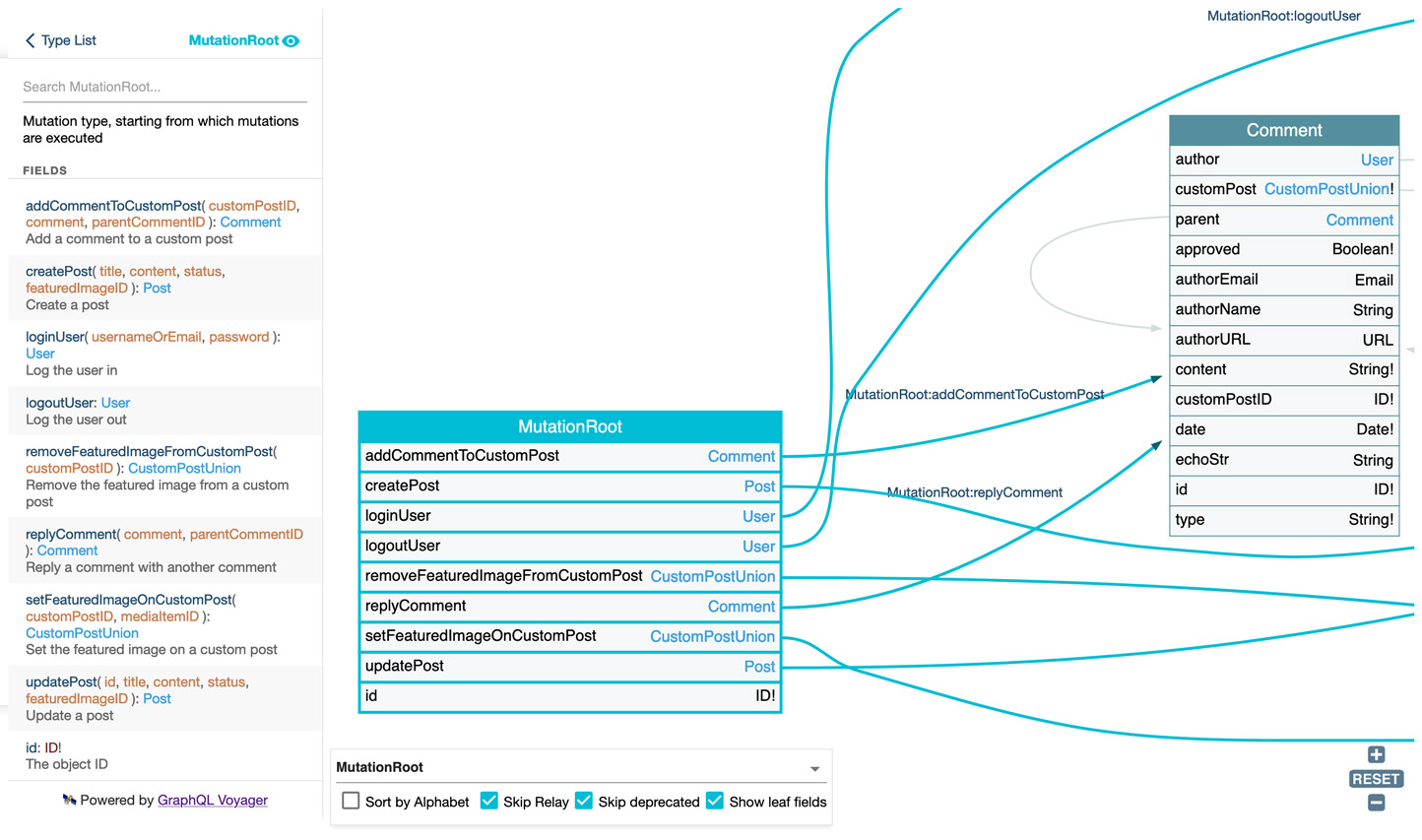
}在此首个版本中,插件包含以下 mutation:
✅ createPost
✅ updatePost
✅ setFeaturedImageforCustomPost
✅ removeFeaturedImageforCustomPost
✅ addCommentToCustomPost
✅ replyComment
✅ loginUser
✅ logoutUser
2. Nested Mutations! 🚀🚀
Nested mutations 是指在 GraphQL 的 root type 以外的类型上执行 mutation 的能力。
这一特性已被提议纳入 GraphQL 规范,但尚未获得批准(也可能永远不会获批)。因此,Gato GraphQL 通过 Nested Mutations 模块将其作为可选功能提供支持。
插件支持以下两种行为:
- 标准 GraphQL 行为(即将 mutation 字段添加到 root type),默认启用
- Nested mutations,作为可选功能启用
例如,上述 query 也可以用以下方式执行:先通过 Root.post 获取文章,然后通过 Post.addComment 添加评论:
mutation AddComment {
post(by: { id: 1459 }) {
addComment(
input: {
comment: "Notice how field `addCommentToCustomPost` under the `Root` type is renamed as `addComment` under the `Post` type? The schema got neater!"
}
) {
id
content
date
}
}
}Mutation 也可以对另一个 mutation 的结果执行数据修改。在下面的 query 中,我们首先通过 Root.post 获取文章,然后对其执行 mutation Post.addComment 并获取创建的评论对象,最后对该评论执行 mutation Comment.reply:
mutation AddCommentAndResponse {
post(by: { id: 1459 }) {
id
title
addComment(input: { comment: "Isn't this awesome?" }) {
id
date
content
reply(input: { comment: "I think so!" }) {
id
date
content
}
}
}
}这真的非常实用! 😍 (在单个 query 中实现相同行为的替代方式是使用 @export 指令……我会在后续的博客文章中对两者进行比较)。
在此首个版本中,插件包含以下 mutation:
✅ CustomPost.update
✅ CustomPost.setFeaturedImage
✅ CustomPost.removeFeaturedImage
✅ CustomPost.addComment
✅ Comment.reply
标准还是 nested?或者两者都要?
你可能有一个 GraphQL API,既供自己的应用程序使用,也向客户端公开。你可能希望为自己的应用程序启用 nested mutations,但由于这是非标准功能,不希望为客户端启用。
好消息是:这完全可以实现。
我在 Schema Configuration 中添加了「Mutation Scheme」部分,用于为 Custom Endpoints 和 Persisted Queries 自定义 schema:
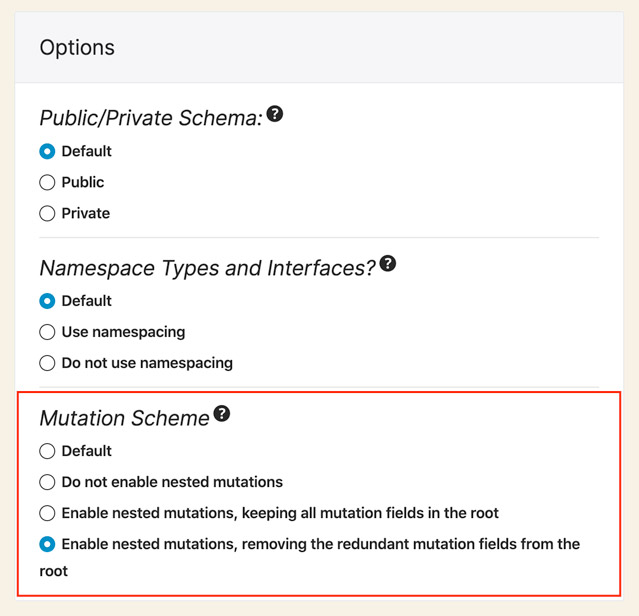
这样,你可以在所有地方禁用 nested mutations,但仅为自己应用程序专用的特定 custom endpoint 启用它。 💪
从 root type 中移除冗余字段
使用 nested mutations 时,mutation 字段可能会被添加到 schema 中两次:
- 一次在 root type 下
- 一次在特定类型下
例如,以下字段可以视为彼此的「重复」:
Root.updatePostPost.update
Gato GraphQL 允许你保留两者,或移除 root type 中那些冗余的字段。
以下 3 种 schema:
- 标准行为:
使用QueryRoot类型处理 query,使用MutationRoot类型处理 mutation - 保留重复 mutation 字段的 nested mutations:
单一的Root类型同时处理 query 和 mutation,该类型中的冗余 mutation 字段被保留 - 从 root type 移除冗余 mutation 字段的 nested mutations:
与上述相同,但从Root类型中移除所有冗余的 mutation 字段
✱ 顺带一提1:这 3 种 schema 都使用同一个端点,通过将 URL 参数 ?mutation_scheme 改为 standard、nested 和 lean_nested 来切换。这得益于 GraphQL 服务器遵循了 code-first 方式。 🤟
✱ 顺带一提2:这些选项可以在 Schema configuration(如上图所示)的「Mutation Scheme」部分中选择,因此你也可以决定对各个 custom endpoints 和 persisted queries 应用何种行为。 👏
现在是时候开始为 v0.8 做准备了! 🙏